The Life Readiness Project
Helping Parents Raise Life-Ready Children
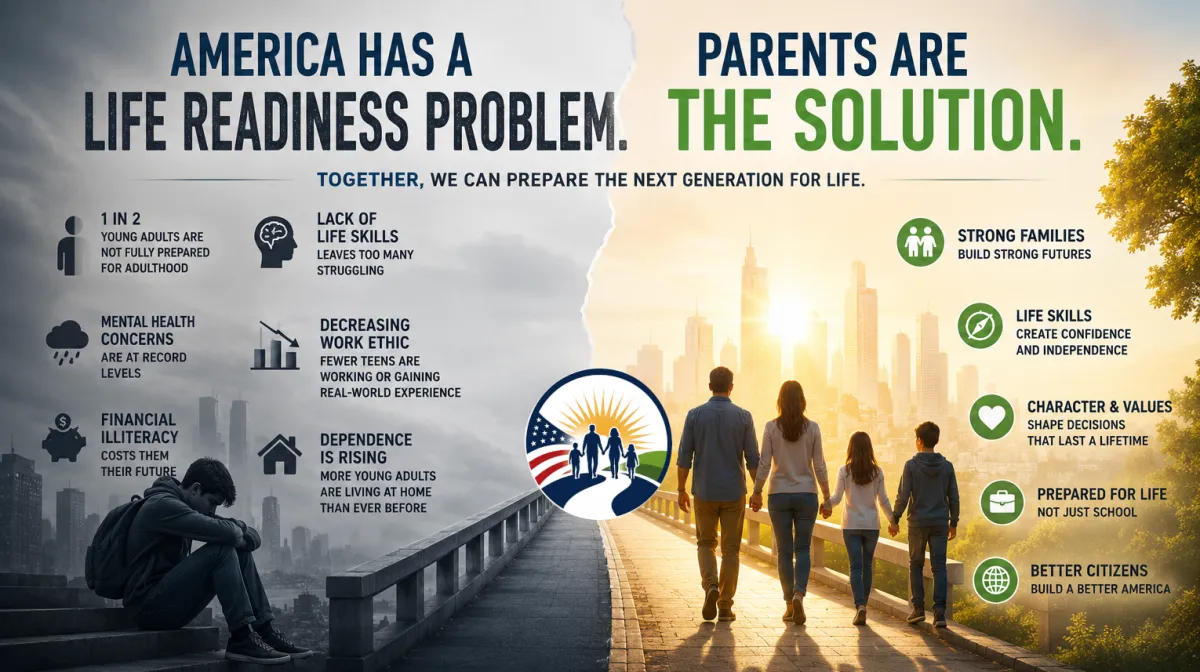
America Has a Life Readiness Problem. Parents Are the Solution.
While academic success is important, life readiness is essential.
Today's children are growing up in a world that prepares them for tests, but too often leaves them unprepared for adulthood. The Life Readiness Project exists to equip parents with the ideas, tools, and encouragement to help their children become capable, confident, responsible adults.
THE PROBLEM
Schools teach math. Nobody teaches life.
Who teaches kids how to handle failure? How to manage money? Keep a commitment? Apologize well? Show up when it's hard?
Nobody. Not really. From outside the family.
That's the gap the Life Readiness Project is built to fill — a simple, proven framework that helps parents do the most important work there is: intentionally shaping the adults their children are becoming.
THE CORE IDEA
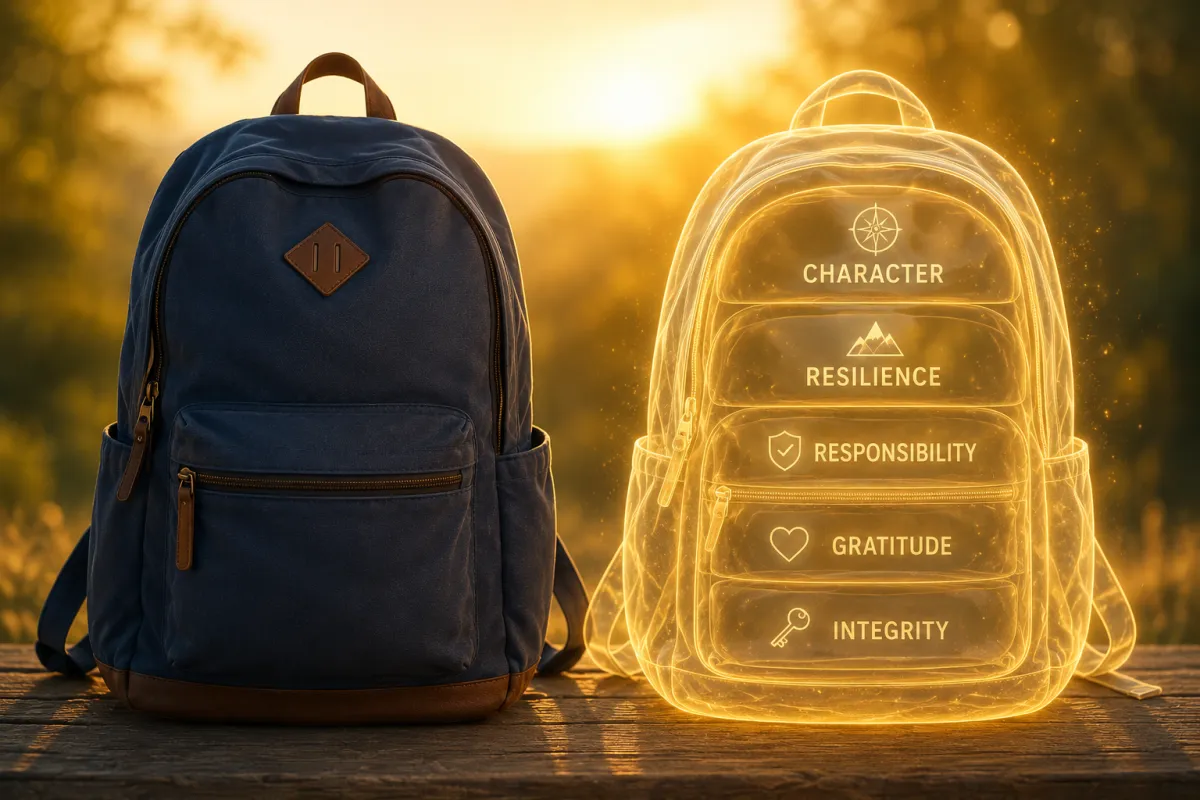
Your Child Carries Two Backpacks
Let's fill the one that matters most.
The Life Readiness Project helps parents raise children who are genuinely ready for real life — not just school.
THE UNSEEN ASSET
The Invisible Backpack
Every child walks out the door each morning with two backpacks.
The first on is easy to spot - stuffed with textbooks and gym clothes and
whatever snack they grabbed on the way out.
The second one is invisible. And it's the one that matters most.
"It holds everything else: character, confidence, judgment, resilience, and a sense of responsibility. The stuff that determines not just what they can do - but who they'll be when no one's watching and when they grow up."
The Life Readiness Project is how parents fill that second backpack - deliberately, lovingly and one day at a time.

THE FRAMEWORK
The Four Building Blocks
Life Readiness isn't one big thing. It's built from four interconnected areas. A child who's strong in all four is genuinely ready for life.
Practical Readiness
The everyday skills that make independence possible.
Managing money and schedules
Cooking, laundry, basic adulting
Solving problems independently

Mental & Emotional Readiness
The inner strength that carries a person through the hard seasons.
Handling stress and setbacks
Understanding their own emotions
Mental toughness & resliience

Relational & Civic Readiness
Because very little in life gets done alone.
Building and keeping friendships
Honest communication
Community responsibility

Character & Virtue Readiness
The foundation that makes everything else worth building.
Integrity & keeping their word
Generosity & compassion
A sense of purpose
THE JOURNEY
Three Stages. One Direction
Children don't become ready for life all at once. The Life Readiness Project is built around three stages - because what a seven-year-old needs to learn is very different from what a 17-year-old needs to own.
Explorers
AGES 0-10
Building the earliest roots - curiosity, kindness, basic responsibility, and the understanding that they are loved and capable.

Pathfinders
AGES 10-15
Taking real ownership. Developing stronger judgement, relational skills, and the foundations of self-discipline.
Trailblazers
AGES 15-20
Practicing independence — with a safety net still nearby. Building the competence, character, and confidence to launch well.
THE PARENT'S ROLE
This Is Parent Leadership
The Life Readiness Project doesn't just prepare kids - it equips parents.
Parent Leadership is the art of asking one question - and letting it shape everything.
"Who is the adult my child is becoming?"
That question changes how you see the ordinary moments of family life. Chores become lessons in responsibility. Conflict become a chance to practice repair. Struggle become the think that builds resilience.
Ready to see where your family stands?
The free Family Readindess Checkup gives you a clear picture of how your child is doing across all Four Building Blocks - in about 10 minutes.
Also, learn more about the foundation of Life Readiness by reviewing the book, "Raising Children Capable of Leaving Home"